

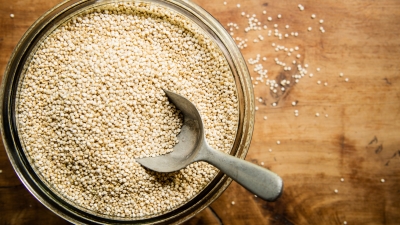
Quinoa is a South American seed that, unlike cereals such as rice, wheat, corn, etc., contains a high content of essential amino acids; that is, it is highly proteinaceous and does not contain gluten, which makes it a great alternative to starchy cereals.
In old age, it is important to have a varied and especially personalized diet that contributes to maintaining body mass, which is lost over the years. Quinoa, containing a lot of protein, up to 50% more than other grains, contributes to the increase of body mass and the maintenance of a healthy weight and a better physical condition, contributing to a better quality of life.
Several investigations suggest that older adults should consume at least 0.40g/kg of body weight more per day to stimulate the maximum assimilation of proteins and, due to its high protein content, quinoa becomes a great ally of the older adult.
The World Health Organization considers quinoa protein as complete as that of milk. Being a simple grain to consume and belonging to the same family as spinach, chard and beetroot, it can be prepared in different ways.
I want to share with you 8 benefits that quinoa can bring to the diet of the elderly and contribute to their quality of life:
1- Contains vitamins
Such as A, E, group B (Thiamine, Riboflavin, Niacin) and Ascorbic acid. Group A vitamins help in the formation and maintenance of teeth, soft and bone tissues, and good vision. Vitamin E has antioxidants preventing the damage caused by free radicals in the body (allergies, cancer, premature aging, etc.). Vitamin B helps in the formation of red blood cells. Ascorbic acid helps in the formation and maintenance of collagen, of vital importance in adulthood since it decreases with time. Collagen is of utmost importance, as it reduces joint pain, improves the health of the skin, nails and hair.
2- Low glycemic index
Which makes it can be consumed by older adults with diabetes or who want to lose or maintain their weight.
3- Does not contain gluten
Which favors older adults with celiac disease or gluten intolerance.
4- Regulates cholesterol
Due to its high fiber content, it improves intestinal transit and the development of beneficial bacterial flora.
5- Contains a high content of unsaturated fats
Highlighting the presence of Omega 3 and 6 acids. High content of oleic fatty acid and lower linoleic, which are involved in the treatment, prevention and improvement of certain pathologies such as diabetes, sclerosis and cardiovascular problems.
6- Has a high index of proteins and minerals
Unlike cereals, it has calcium, phosphorus, iron, magnesium and zinc that help in various health problems such as: autoimmune diseases, muscular diseases, hypertension, anemia, obstructions of blood vessels.
7- High Calcium content
Which helps to avoid decalcification and develop osteoporosis or bone fragility.
8- Has essential amino acids
Amino acids collaborate in the proper functioning of the human body, we cite some:
• Phenylalanine.- which is a brain stimulant.
• Alanine.- which is a good source of energy for the brain
• Glycine.- which acts as a regulator of motor function
• Glutamic acid.- Involved in the functions for learning, memorization and neuronal plasticity that is nothing other than the anatomical and functional regeneration of neurons that have suffered some damage due to cardiovascular accident.
• Aspartic acid: improves liver function and is essential for cardiovascular maintenance.
• Tyrosine: which has an anti-stress action, helps in depression and anxiety.
• Lysine: helps in the formation of antibodies to defend the body from diseases, helps in gastric function, in cell repair and in the transport and absorption of Ca.
Due to the high content of essential amino acids in its protein, quinoa is considered as the only food of the plant kingdom that provides all the essential amino acids that are extremely close to the human nutrition standards established by the FAO (Food and Agriculture Organization of the United Nations).